UFC Submission-by-Round Betting: The Academic Data UK Punters Miss
 Available in US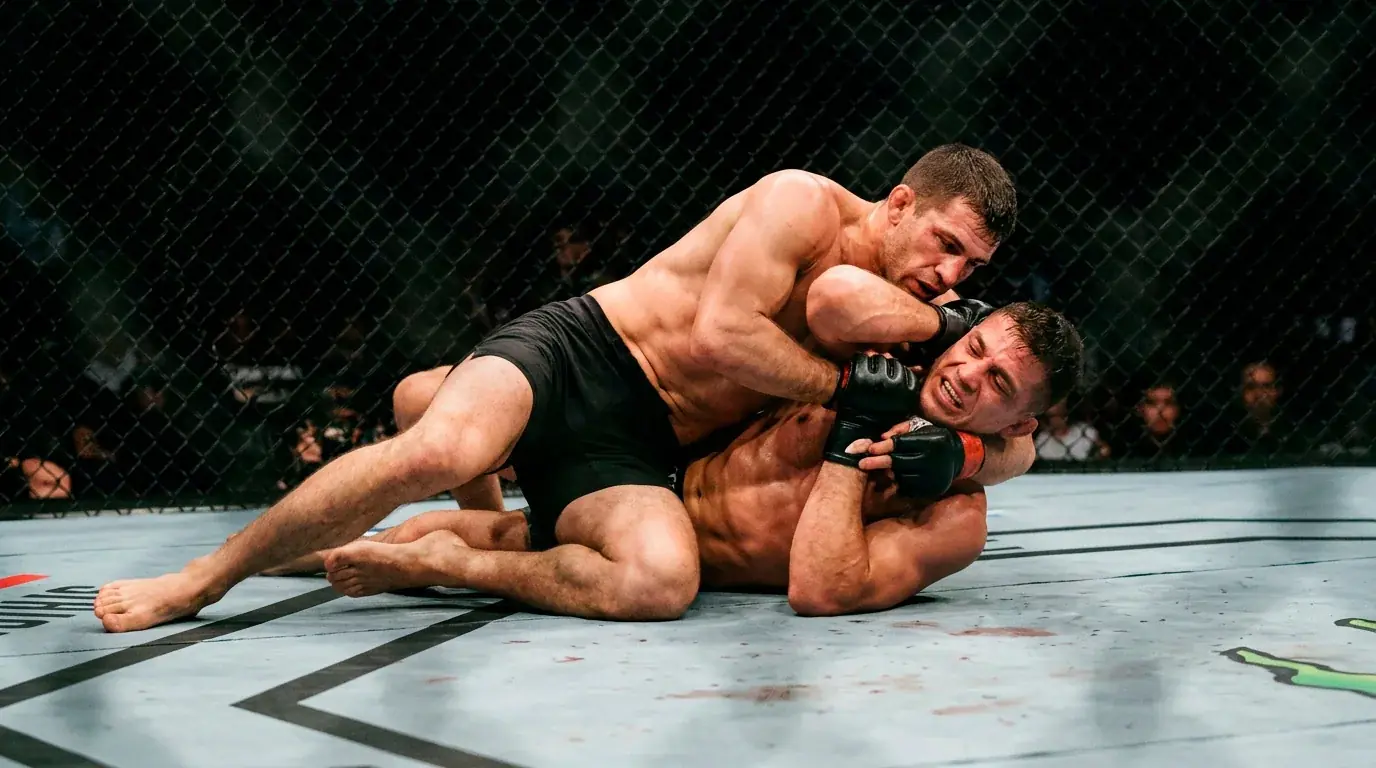
The market where most of the real work has already been done for you
Submission-by-round betting is the market with the widest gap between what is publicly understood and what the academic research has already established. The data is out there, it has been peer-reviewed, and almost nobody who prices these markets at the casual end of the UK public has bothered to read it. That gap is exactly the kind of structural inefficiency that makes a round bettor’s life worth the effort.
A 2025 paper in the Journal of Sports Medicine and Physical Fitness reviewed submissions across UFC 1 through UFC 294, covering 1993 to 2023. The headline numbers — submission rate around 20%, head the most targeted area, majority of submissions being chokes — give you the skeleton of a decent pricing model before you even look at a specific match-up. “The submission rate in the UFC is around 20%. While submission rates are decreasing, our study found that the head was most targeted, the majority were choking submissions, and intermediate weight divisions recorded a higher number of submission finishes”, as the lead author put it. That is the kind of sentence I read and immediately reach for a notepad.
This piece maps the academic data onto the submission-by-round market as UK books actually offer it. By the end, you should have a clearer sense of when the posted prices on sub-by-round combos are genuinely priced and when they are sucker bets dressed up in long odds.
The submission base rate in context
Twenty percent of UFC fights end by submission. That is the starting figure for any sub-by-round conversation and it is lower than most casual bettors assume. If you grew up on early UFC footage, your intuition is probably pulling towards 30% or 40%, because the early cards had higher submission rates driven by the wrestling-versus-striking style imbalance. The modern UFC has evolved past that. Striking defence has improved, grappling fluency is nearly universal, and the submissions that do land come from specialists exploiting specific openings.
The implication for round pricing is that any submission market priced as though the base rate is 25% or higher is typically mispriced for the punter. The fair starting point is 20%, and the conditional probability gets adjusted from there based on division, style, and fighter history. Very few fighters in the modern UFC carry a personal submission rate above 40% across a meaningful sample of bouts, which means even dedicated grapplers are looking at fair sub odds in the 3.00-to-5.00 range rather than the 2.00-to-3.00 range the public sometimes prices them at.
Another detail from the academic work is that submission rates are decreasing over time. This is not a linear trend, but the direction is clear enough that I treat older submission data as slightly less predictive of current outcomes than the raw numbers might suggest. A submission-heavy fighter whose career peaked in 2015 to 2018 is not pricing at the same probability as a comparable fighter would have been eight years ago, and the market occasionally lags this adjustment.
Round distribution of submissions
The question a sub-by-round bettor really wants answered is not “how often do submissions happen” but “when in the fight do they happen”. The answer is messier than the KO distribution because submissions require a specific set of circumstances — position, exhaustion, mistake — that take time to develop.
Across the historical dataset, round one accounts for roughly 30% to 35% of all submissions. Round two is similar, at 30% to 35%. Round three picks up much of the remainder in three-round bouts. Five-round fights see rounds four and five account for a slightly higher share than you might expect, because exhaustion in championship rounds opens up submissions that would have been impossible in fresher fighters. The exact numbers move a few percent depending on the era and sample, but the shape holds. Submissions do not cluster as aggressively into the first round as knockouts do.
This matters for combo pricing. The independence-based model — multiply sub probability by round probability — under-prices round-one submissions only mildly and over-prices round-three submissions only mildly. Compare that to the KO market, where independence under-prices round one significantly. Sub combos are priced closer to fair on average than KO combos, which is a small but real edge the disciplined bettor should know about.
Round-one submission prices are a special category. The romantic stereotype — “grappler shoots, gets the back, finishes inside ninety seconds” — happens, but less often than R1 KO highlights would suggest. Fair odds on any R1 submission for a typical fight sit at 7.00 or longer, and anything priced shorter than that needs a specific reason.
Weight class effects on submission timing
The academic data names intermediate weight divisions as the ones with higher submission finish rates. That translates to lightweight, welterweight, and featherweight in the modern weight structure, where grappling skill is densely packed and the physical size difference between fighters rarely precludes submission attempts.
At heavyweight, submissions sit at 21.7% of finishes, which is higher than most people expect for a division dominated by knockouts. But those submissions cluster heavily into exhaustion scenarios — round two and three finishes from fighters who have been carrying their weight around for several minutes. Heavyweight round-one submission rates are disproportionately low, and round-one submission prices at heavyweight almost always sit short relative to fair value.
Women’s strawweight shares the same submission rate as heavyweight at 21.7%, which is one of the more counter-intuitive numbers in the UFC. Strawweight fights see 66.9% of their bouts reach the judges, the highest decision rate in the organisation. The explanation is that when strawweight fights do finish, the finishes are disproportionately submissions rather than KOs — the power-to-durability ratio in the division favours grappling finishes over striking finishes. Round distribution at strawweight skews later than the all-division average, with round three accounting for a meaningful share of the submission finishes that do happen.
Flyweight is another division where submission rates are higher than public perception suggests, driven by the volume of grappling exchanges and the technical fluency of the roster. Sub-by-round prices at flyweight are often more generously posted than they should be on books that treat all men’s lower divisions as similar.
Market pricing notes from the UK books
The sub-by-round market at UK sportsbooks is priced with less attention than the moneyline or over/under markets. This is both a blessing and a curse. The blessing is that genuinely mispriced sub-by-round combos appear with some regularity, particularly on undercard bouts where algorithmic pricing has less data to lean on. The curse is that the overround on sub combos runs higher than on cleaner markets, with 110% to 115% being a typical range for the sum of all submission-by-round combos on a single fight.
The specific combos worth hunting are round-two and round-three submissions by known grapplers, where the public narrative fixates on round-one finish and the middle-rounds sub prices sit longer than fair. Prices of 10.00 to 15.00 on round-two submissions by fighters with a demonstrated grappling game are routinely available when fair odds are in the 8.00 to 12.00 range. Not every card will have one, but over a year of careful watching, two or three combos like this usually clear enough to justify the work.
The traps are twofold. The first trap is round-one submission prices shortened by public excitement about a grappler returning from a long layoff or debuting with hype. The second is the “any round submission” market priced as though the sum of round-by-round prices, when in fact it should sit slightly lower due to overround bundling. Always check the single sub prices as well as the round-specific combos before deciding which vehicle to use.
Pulling the threads together
Submission-by-round pricing rewards anyone willing to read two academic papers and do some division-level homework. The base rate is 20%. The round distribution is flatter than the public thinks. The weight classes with the richest grappling are lightweight, welterweight, and featherweight, with heavyweight sub rates surprisingly high when exhaustion factors in. Women’s strawweight is the stealth submission division nobody expects.
The edge in the market lives in round-two and round-three submissions by known grapplers at undercard pricing, and in fading the short prices on round-one submissions driven by public excitement. Do that homework, shade for weight class and style, and sub-by-round betting becomes one of the more reliably edge-positive corners of UFC betting for the UK punter willing to put in the reading.
Which round has the highest submission likelihood?
Rounds one and two are essentially tied in the historical data, each accounting for 30% to 35% of all submissions across the UFC dataset. Round three picks up much of the remainder in three-round bouts, with championship-round submissions in five-round fights showing up more often than pure exhaustion models predict. The clustering is much flatter than the KO distribution, which is why sub-by-round combos price closer to fair than KO-by-round combos.
Do strangles price differently from joint locks?
Books rarely price strangles separately from joint locks — the market is almost always ‘submission’ as a single bucket. If your book does offer the split, strangles dominate the historical data. The 2025 academic review found the head was the most targeted area and that the majority of submissions were choking submissions, which is a robust finding across thirty years of UFC history.
Are rear-naked chokes the dominant finish type?
Yes, within the submission category. Rear-naked chokes account for a substantially higher share of submission finishes than any other specific technique, followed by various guillotine and arm-triangle choke variants. Joint locks — heel hooks, kimuras, armbars — are a meaningful minority but well behind strangulations. The dominance of chokes has strengthened as grappling evolved towards position-heavy systems rather than catch-style limb hunting.
Prepared by the Round Betting ufc editorial staff.