
UFC Round Markets on UK Betting Exchanges: Peer-to-Peer Pricing
 Available in US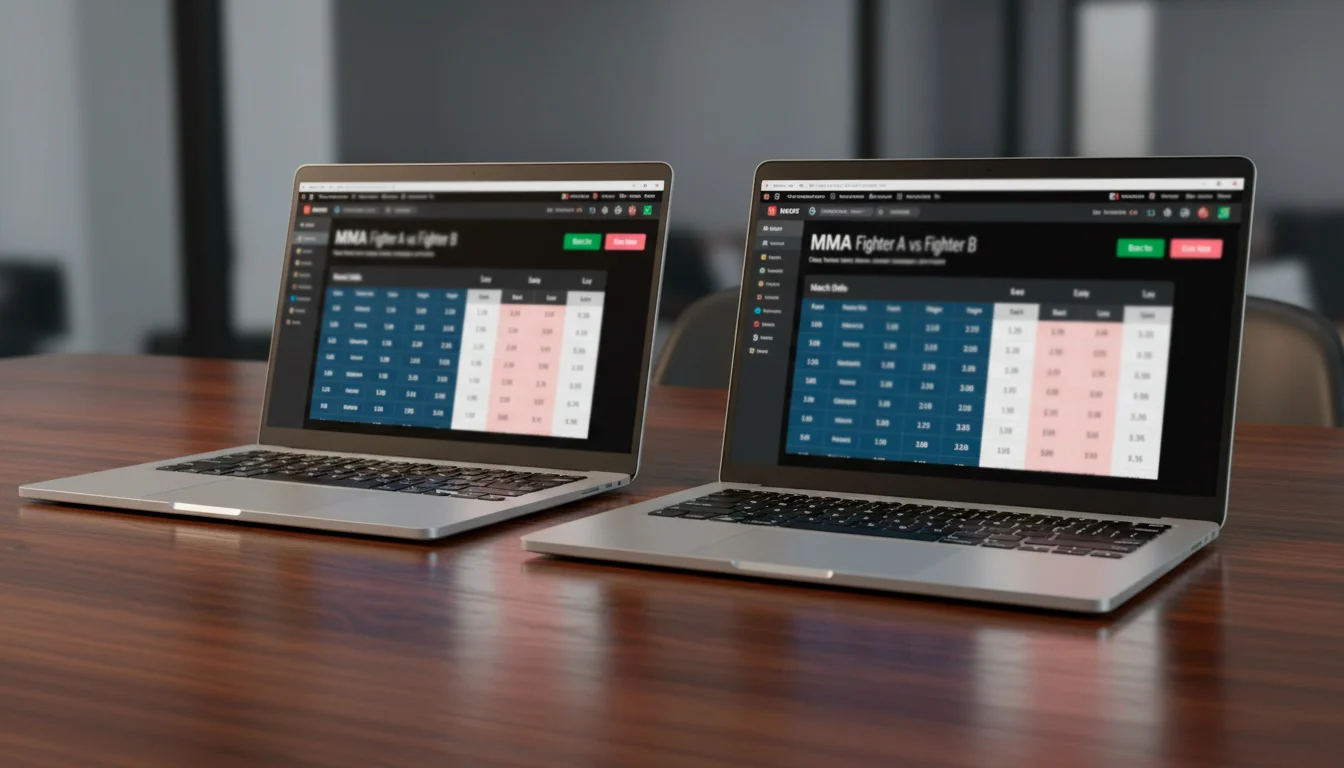
The other way to bet on UFC rounds
Most UK UFC bettors have never placed a bet on an exchange. The product is structurally different, the pricing behaves differently, and the user interface is unfamiliar enough to most sportsbook users that the category stays invisible until somebody specifically explains it. That invisibility is part of why exchange UFC round markets remain an under-exploited corner of UK betting — the punters who use exchanges get reliably better pricing on liquid markets, and the liquidity constraints that hold the product back on niche UFC props are navigable with some care.
I have used exchanges for MMA betting for most of the past decade. They are not a replacement for sportsbooks — the liquidity on round-specific combos and undercard props is too thin for meaningful stakes — but for moneyline, over/under rounds, and main-event specials, the exchange is usually the tighter pricing venue. As Grainne Hurst of the Betting and Gaming Council noted of the outgoing UKGC chief executive, “his hands-on approach and willingness to engage directly with the industry helped foster a more informed and productive working relationship”, and understanding how the exchange sits alongside sportsbook pricing is part of that broader engaged posture.
This piece walks through how exchanges work, how their commission structure compares to sportsbook overround, where liquidity sits on UFC round markets, and the specific lay-the-distance strategies that exchanges enable but sportsbooks cannot.
Exchange vs sportsbook: the structural difference
A sportsbook is a party you bet against. You place your bet, the book accepts it, and the book pays you if you win or keeps your stake if you lose. The book sets the prices, the book takes the margin, and the book absorbs the risk. Every sportsbook price has vig baked in.
An exchange is a platform where punters bet against each other. You can back an outcome — betting that it will happen — or lay an outcome, betting that it will not. Another punter is taking the opposite side of your bet, and the exchange charges a commission on your net winnings. The exchange is not taking risk. It is facilitating trades between users and collecting a fee.
The practical consequence is that exchange prices are typically tighter than sportsbook prices on liquid markets. When multiple users compete to offer the best back or lay price, the spread between them narrows, and the effective vig — the commission you pay if you win — is usually smaller than the overround a sportsbook would charge on the same market. Commission rates sit at 2% to 5% on most UK exchanges, varying by platform and user tier.
The UK sports betting market generates around £2.48 billion in annual gross gambling yield, one of the largest regulated markets in the world, and a measurable slice of that turnover flows through exchanges rather than traditional bookmakers. The exchange share has been stable for years and reflects a sustained niche of price-sensitive bettors who value the tighter pricing despite the more complex user experience.
Commission structure and what it actually costs
Commission on an exchange is charged on your net winnings from a given market or event, not on your stake. If you back an outcome at 2.50 for £10 and it wins, you profit £15 before commission. A 5% commission rate takes £0.75, leaving net profit of £14.25. If the same bet loses, you pay no commission — you simply lose the £10 stake.
The asymmetry between the commission-on-winnings structure and the overround-on-stake structure of sportsbooks is what produces the tighter effective pricing. A sportsbook charging 5% overround effectively takes 5% of every stake placed, whether the bet wins or loses. An exchange charging 5% commission only takes from winning bets. Over a bettor’s lifetime with roughly even win-lose distribution, the effective cost at 5% commission is meaningfully lower than the effective cost at 5% overround.
Some exchanges operate tiered commission rates that reward high-volume users with lower rates. The top tiers can reach 2% or lower, which means the effective vig for a heavy bettor on a liquid market is close to zero on the exchange while remaining at sportsbook-level overround on any sportsbook they also use. This is why serious value-hunting UK punters typically maintain both sportsbook and exchange accounts.
The premium charge is the other piece of the structure worth knowing. Exchanges reserve the right to charge additional fees on users who win at unusually high rates over long periods. The specific thresholds vary and the impact on typical UFC round bettors is minimal, but for bettors generating substantial win rates on specific markets, the premium charge can reduce the exchange’s effective pricing advantage materially. Premium charges do not apply uniformly to all markets, and UFC round betting specifically is not a market where typical premium-charge thresholds are easily met.
Liquidity on UFC round markets
Exchange liquidity on UFC markets is uneven. Moneyline on main events is excellent — tens or hundreds of thousands of pounds matched on large fights, with tight spreads between the best back and lay prices. Over/under rounds markets on main events are good, typically several thousand pounds matched at any given time with spreads wider than moneyline but still competitive.
Round-specific combos are where the liquidity story gets thin. A combo like “fighter A to win by submission in round 2” on a main event might have £100 or £200 matched on the exchange, with bid-ask spreads wide enough to make the effective pricing no better than a sportsbook. Undercard round-specific markets often have no matched liquidity at all — the market exists in name only, with nobody offering to back or lay.
The practical implication is that exchanges are the right venue for moneyline and total-rounds markets on major cards, and the wrong venue for anything more granular or any bout outside the main card. A bettor who wants meaningful volume on round-specific combos has to use sportsbooks, accept the wider overround, and bank the edge that comes from identifying genuinely mispriced combos.
Exchange liquidity tends to deepen significantly in the 24 hours before a card as public attention focuses on the event. A market that looks thin on Wednesday may have real volume by Friday evening. The bettor willing to wait for liquidity to arrive, and then execute at the tighter exchange prices, captures pricing that is otherwise unavailable.
Lay-the-distance and the strategies that exchanges enable
The structural feature that exchanges enable and sportsbooks do not is laying — betting that an outcome will not happen. On a sportsbook, every bet is a back bet. On an exchange, any bet can be taken as a lay, which means the bettor can profit from an outcome failing to occur.
The classic round-market application is laying the distance. If you think a fight is likely to end before the final bell, you can lay “fight to go the distance” rather than backing “fight does not go the distance” at a sportsbook. The mechanics produce similar exposure with one important difference — laying on an exchange lets you specify your liability cap precisely, which is useful for managing exposure on variance-heavy bets.
Laying the under on rounds in bouts where you expect a specific finish pattern is another exchange-specific strategy. On a sportsbook you back the over at the posted price and accept the vig. On an exchange you lay the under at the best available lay price, which can sometimes offer a materially better effective probability than the sportsbook’s over price.
The third strategy is in-play laying. A favourite who has won round one clearly and whose price has shortened significantly can be laid on the exchange for profit if they subsequently lose. The sportsbook equivalent would be backing the underdog at their lengthened price, which has similar logic but different risk structure.
The habit that uses exchanges well
My workflow is to check the exchange on every main-event moneyline and over/under rounds bet I intend to place. If the exchange price is materially tighter than the sportsbook price after commission, I use the exchange. If it is similar or worse, I use the sportsbook. This takes an extra minute per bet and saves a measurable amount of vig across a calendar year.
For round-specific combos and undercard props, I do not check the exchange — the liquidity is almost never there to make it worth the time. The sportsbook is the right venue for those bets even if the effective vig is wider.
Exchanges are not a secret weapon. They are a category of pricing venue that sits alongside sportsbooks and wins on specific market types while losing on others. The UK punter who uses both, knowing which to use for which bet, pays less vig per unit turnover than the punter who uses only one. Across a year of several hundred bets, the difference compounds into real money.
Is round-market liquidity deep enough for pre-fight bets?
On moneyline and over/under rounds for main events, yes — typically several thousand pounds matched on major cards, with spreads competitive to sportsbook pricing once commission is accounted for. On round-specific combos and undercard bouts, usually no — matched volume often sits at under £500 and spreads are wide enough that exchange pricing is no better than sportsbook. The liquidity check is specific to each market and worth doing before assuming exchange pricing will be tighter.
Do exchanges price round-one finishes more tightly than sportsbooks?
Sometimes, on major cards where exchange liquidity is deep. The competitive back-and-lay pricing on high-volume events can produce tighter spreads on round-one finish markets than sportsbook overround. On smaller cards or undercard bouts, exchange liquidity on round-one finish markets is thin enough that the sportsbook is usually the better venue despite the wider nominal overround.
Does premium charge apply to UFC round markets?
Technically yes, but practically the premium-charge thresholds are set high enough that typical UFC round bettors do not trigger them even with strong long-term win rates. The premium charge applies to users generating consistent high-volume profits across multiple sports, and UFC round betting alone would rarely qualify a user for premium-charge status regardless of their win rate on the specific markets.
Written by the editors at Round Betting ufc.