UFC Live Round Betting: Between-Round Windows, Price Movement and Hedging
 Available in US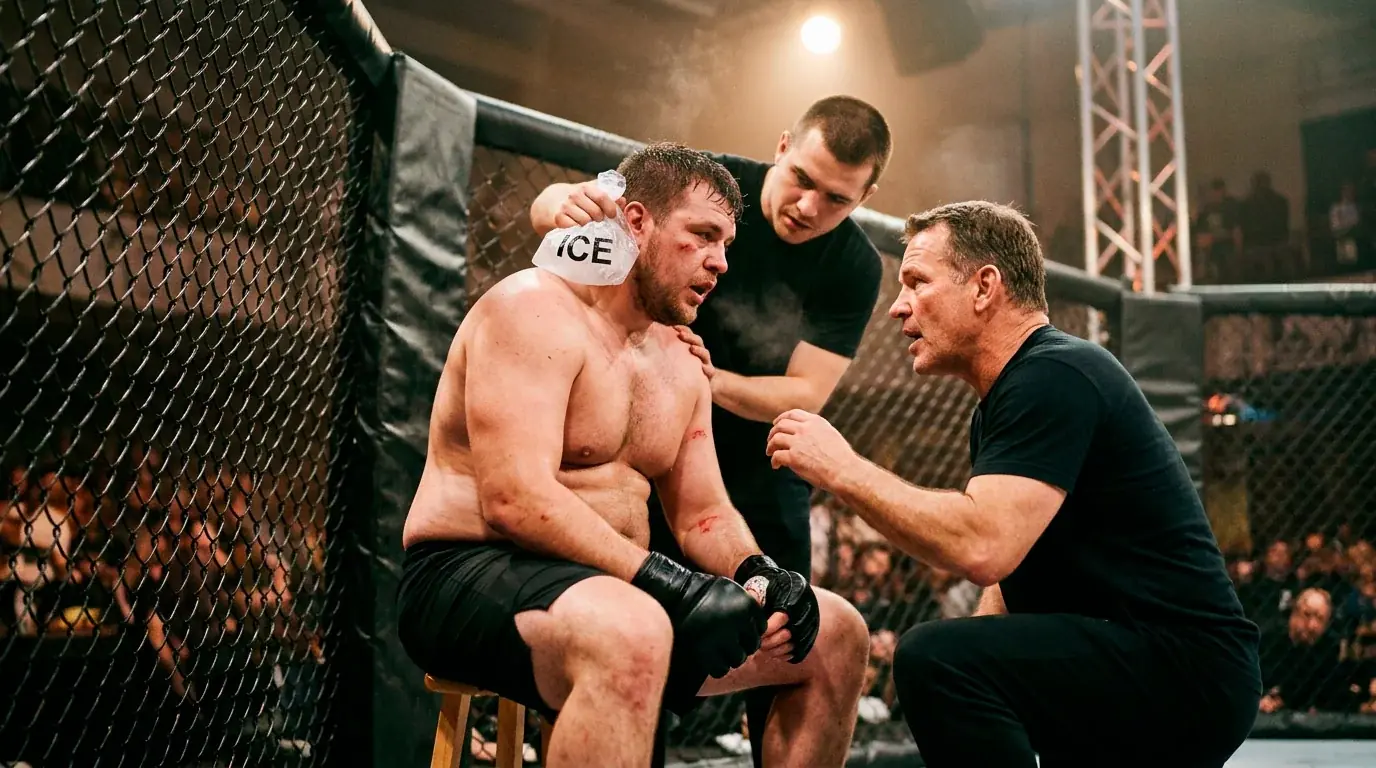
Table of Contents
- Why the 60 seconds between rounds is where I make my best decisions
- How live round markets actually work on UK books
- The between-round window: 60 seconds to read the fight
- Reading damage and energy without the broadcast telling you
- Price movement patterns you can actually bank on
- Hedging scenarios: when locking in beats letting it ride
- Latency, delay and the tax you pay without knowing it
- Responsible live betting when the action is real
- A worked example from a three-round lightweight scrap
- Frequently asked questions about UFC live round betting
- Discipline is the only live edge that compounds
Why the 60 seconds between rounds is where I make my best decisions
The first live UFC round bet that paid for my annual subscriptions came from doing almost nothing. I had watched the first round of a heavyweight main card fight, seen the favourite absorb two clean shots that rocked him visibly, and then spent 40 seconds of the corner break waiting for the book to post the round-two finish line. When it appeared, the price on the underdog’s KO/TKO combo had barely moved. I staked, the finish came at 2:15 of round two, and the ticket paid 5.60.
That experience shaped how I think about live round betting. The real work is not watching the fight. The real work is watching the line against the fight. Between-round windows are where the UK online gambling market genuinely shows you its maths in motion — a sector that has grown substantially in recent years, with online gambling gross yield up more than £900 million year-on-year. That growth pulls more money through live markets than ever before, and with more money comes more mispricing, especially in the first 30 seconds of the between-round window before the model finishes updating.
This guide covers how live round markets actually work, what happens during the 60-second corner break, how to read damage without the broadcast telling you, the recurring price movement patterns worth trading, the cash-out mechanics and hedging decisions, the latency tax that most punters do not know they are paying, and the responsible-gambling layer that should sit underneath everything. For the broader context of how live fits into your round-betting toolkit, the round betting UFC playbook is the parent read.
A framing line before we start. Live round betting rewards patience more than speed. The bettors who lose at live are the ones hammering the refresh button and reacting to every punch. The bettors who win at live are the ones with a pre-fight plan, a short list of scenarios they want to trade on, and the discipline to stake only when those scenarios appear.
How live round markets actually work on UK books
A live round market is not one market. It is a sequence of markets that open and close as the fight progresses, with prices that shift between each round based on what the book’s model has just observed. Understanding the sequence is the first piece of the puzzle.
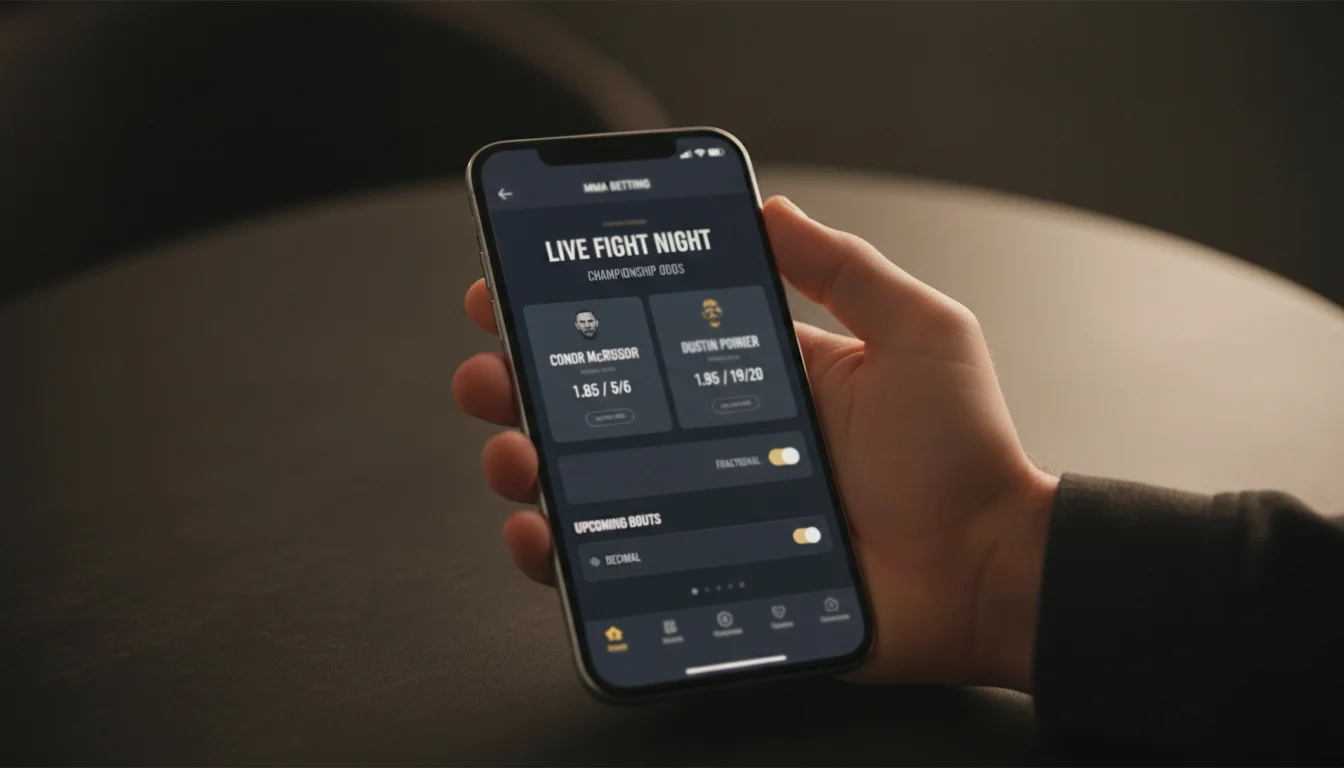
When a fight begins, the live lines open with the pre-fight numbers as a baseline. For a three-round prelim, that means a live over/under 2.5 rounds line, live KO/TKO in remaining rounds, live submission in remaining rounds, and a live moneyline. The odds move in real time as the round unfolds — a fighter landing a knockdown shortens his KO combo prices, a fighter landing a takedown shortens his submission prices, and so on. During an active round, most UK books suspend the bet slip at high-action moments (a downed fighter, a scramble, the final seconds of a close round) to protect themselves against latency arbitrage.
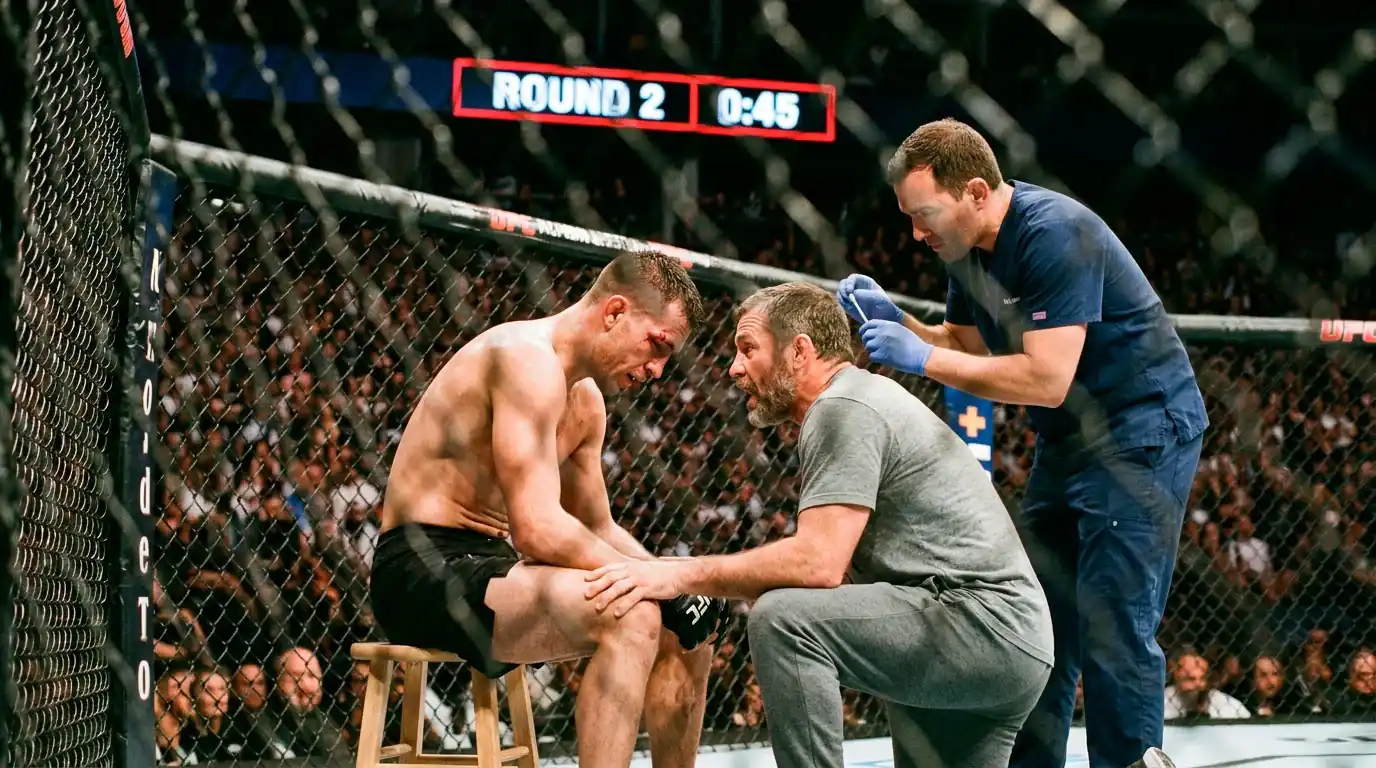
When round one ends, the live market enters the between-round window. This is the 60-second corner break. During this window, the book’s model recalibrates based on the just-completed round, posts a new set of prices for the remaining rounds, and accepts stakes at those new prices. The window closes when round two begins. This is the single cleanest opportunity in live UFC betting, because the prices are static for a full minute and your decision can be deliberate.
After round two, the process repeats with tighter windows and fewer remaining round options. By the time you reach the round-three break on a five-round fight, the available markets have narrowed considerably — no more round-one or round-two combo options, only round three onwards remains priceable.
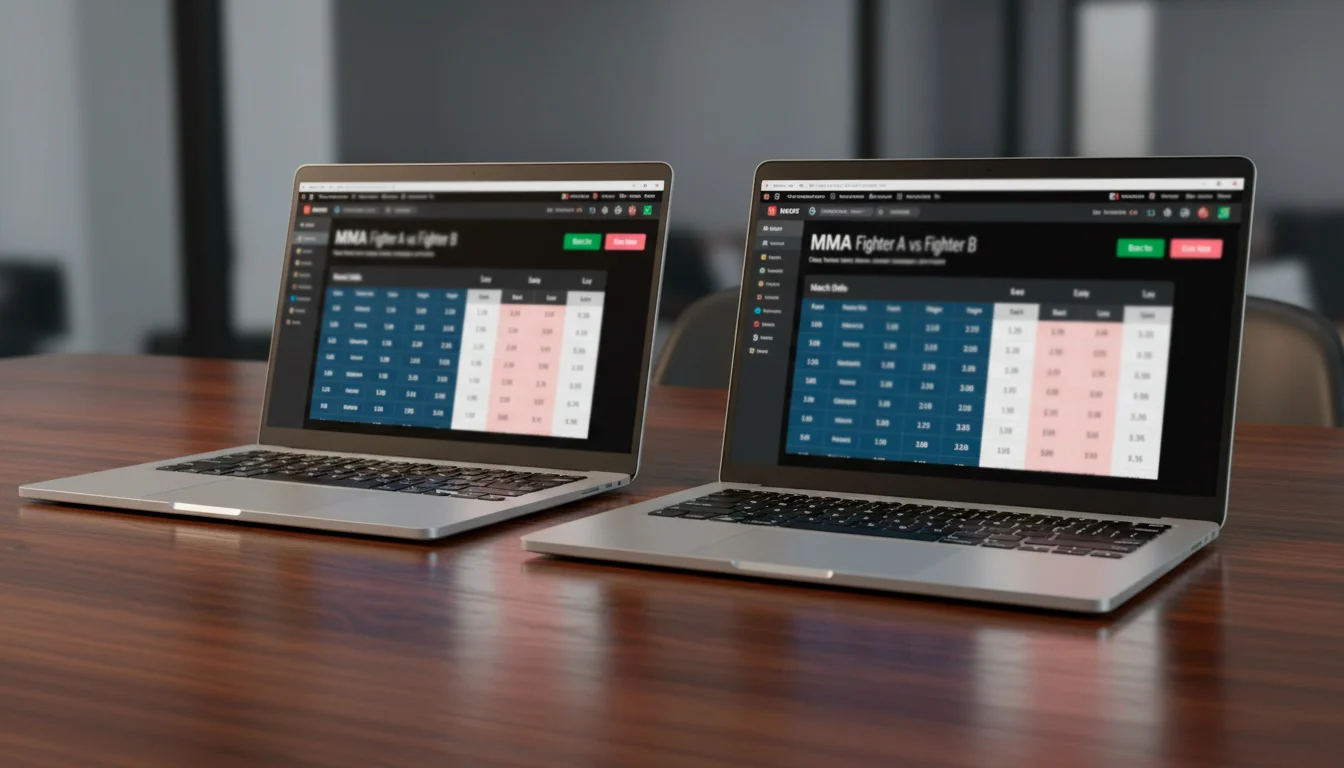
One operational note. Not every UK book offers the same depth of live round markets. Big operators with full MMA coverage post the complete grid of method-and-round combos between rounds. Smaller books or secondary operators often strip the offering down to moneyline and over/under rounds only. If you are serious about live round betting, it is worth having accounts at two or three books so you can cross-compare prices and find the sharpest line for your specific ticket.
The between-round window: 60 seconds to read the fight
The corner break is the centre of gravity for live round betting. If you are going to remember one thing from this article, let it be this — the 60 seconds between rounds is when the book is least sharp and you are least rushed. Every meaningful live round bet I have placed has been inside that window.
Here is what actually happens in those 60 seconds. The round ends. The book’s automated model starts recalibrating based on round-one data — strike counts, knockdown presence, takedowns, control time, damage indicators. During the first 10 to 20 seconds of the break, the posted prices are often lagging the new information. They reflect the pre-round model plus a partial update. During seconds 20 to 40, the model typically catches up and the prices settle into their new equilibrium. During the final 10 to 20 seconds, prices are generally stable as the book waits for round two to begin.
The small window at the start of the break is where the edge lives. If a round ended with a dominant performance by one fighter, the combo prices for that fighter’s finish combos in round two will eventually shorten significantly. But for the first 15 seconds after the horn, the shortening may not have fully happened. Staking in those early seconds, at prices that do not yet reflect what just occurred, is the cleanest form of live round edge.
The trouble is that most casual bettors do not have a pre-round plan, which means they waste those early seconds deciding what to do rather than acting. My habit is to write down, during the first round itself, a short list of scenarios I want to trade on if they materialise. Something like “if Fighter A drops Fighter B in round one, I stake the round-two KO/TKO combo up to 2.00 units at 3.50 or longer.” That scenario note lets me act in seconds when the round ends, rather than thinking while the market is busy re-pricing.
One failure mode worth naming. If you are watching the fight on a streaming service with any broadcast delay, the book’s line may have already updated before you even see the end of the round. In that case, the window you thought was 60 seconds is actually 40 or 50 on your end. The latency section below covers this in detail, but it is worth flagging here because it is the single biggest structural disadvantage UK live bettors face.
Reading damage and energy without the broadcast telling you
Broadcast commentary is unreliable for live betting. The commentators are storytellers first and analysts second — they lean into narratives that favour whoever is landing cleaner shots, and they often miss the structural signals that matter most for a round-betting model. The skill of reading a round for live-betting purposes is the skill of seeing what the commentators miss.
Damage first. The most important damage signal is not the highlight-reel shot. It is the cumulative evidence — the way a fighter is holding their guard at the end of a round versus the start, the way they are moving their hips, whether their head movement has decayed, whether their jab still snaps or has started pawing. A fighter who absorbs three clean shots but stays technical throughout the round is less hurt than a fighter who absorbs one clean shot and visibly loses a layer of composure afterwards.
Average men’s UFC bouts run just under 11 minutes, with women’s bouts slightly over 12 minutes across a large 1,443-fight sample. That average hides the cardio distribution. Most fighters have roughly nine minutes of genuinely high-output offence before their pace drops measurably. If you are watching a fighter in round one throwing at their maximum, you are watching someone who will be measurably slower by minute six of round two. That cardio arithmetic is what drives most late-round finishes.
Energy is trickier to read than damage because it often shows up in subtle ways. The fighter who used to come forward now stays on the back foot. The fighter who was throwing combinations now throws singles. None of these are highlighted by the broadcast because they are absences rather than events. But they are exactly the signals that a live-betting model uses to shift the under price toward the fighter whose energy is fading.
One simple drill. For the first 30 seconds of each round, ignore the commentary entirely. Watch only the fighters. Write down who is moving better, who is breathing heavier, who is pressing and who is retreating. Then compare your read to where the live price moves in the next 30 seconds. After three or four fights, you will see that your read often anticipates the line, which is exactly the sequence you want.
Price movement patterns you can actually bank on
Across hundreds of live round betting sessions, three price movement patterns show up often enough to treat as reliable working hypotheses. None of them are guaranteed edges, but each one is a starting point for a trade you can stake with more confidence than a cold live bet.
The first pattern is the damage-repricing overshoot. When a fighter takes a visibly bad round — knocked down, dominated in a scramble, controlled on the ground for extended periods — the between-round market often prices the damage more aggressively than the fight actually warrants. A fighter who loses a competitive round without taking catastrophic damage can see his moneyline price drift out by 20 to 30 per cent in the between-round window, and his finish combo prices for the next round shorten sharply. If you believe the fighter is hurt less than the market thinks, fading the overshoot — taking the underdog’s moneyline or the decision combo — often produces value.
The second is the cardio premium. Favourites in the UFC win around 72 per cent of their fights. When a favourite wins the first round clearly but at a visible energetic cost, the between-round prices often continue to favour the favourite at roughly the same level as pre-fight. The market is slow to price cardio depletion in the first round, because the data during the round does not always show the fade. If your eye test says the favourite is already tired at the end of round one, the underdog’s moneyline and the underdog’s decision combo become genuinely interesting live bets.
The third is the momentum overreaction. After a knockdown or a near-finish, the market tends to swing hard toward the fighter who just scored. The round-two finish combo for that fighter shortens dramatically, often to prices that assume he will close the show. But UFC fighters recover between rounds better than most casual punters realise — the 60-second corner break gives them time to clear their head, take instructions, and re-enter round two with something close to their full capabilities. If a fighter survives a near-finish, the round-two finish combo for the scoring fighter is frequently priced too short, which means fading that line back toward decision or round-three combos carries expected value.
One pattern that does not hold up. Casual punters sometimes assume that a fighter who has a great round one will have a great round two. This is not what the data shows. Second-round performance correlates more with cardio and matchup than with first-round momentum. The between-round market is sharper about this than many punters realise, and chasing the first-round winner into round two usually means paying an inflated combo price.
Cash-out live logic between the rounds
Cash-out offers between rounds are where the book lets you convert your pre-fight or in-play ticket into a guaranteed return at a reduced price. The cash-out formula is simple in principle — the book calculates the current fair value of your ticket, applies their cash-out margin, and shows you the number. In practice, the offer often disappears during high-action moments and reappears between rounds, which is where most cash-out decisions actually get made. A dedicated piece on the mechanics at UK operators sits at the round betting cash-out rules page.
The quick rule I apply. If the cash-out number represents more than 90 per cent of my target return and my original pick is facing a meaningful threat to its chances, I take the cash-out. If the cash-out is below 70 per cent of target and my pick is still comfortably winning, I let the ticket ride. Between those two thresholds, I weigh the specific matchup and the remaining rounds.
Hedging scenarios: when locking in beats letting it ride
Hedging is the technique that separates profitable live bettors from emotionally-driven ones. The idea is simple — if a bet I placed is now showing a better probability of winning than I originally estimated, I can take a smaller counter-position to lock in some of the gain regardless of how the fight actually ends. Hedging costs a slice of expected value but converts variance into certainty, which is often the right trade in a live market.
The classic hedging scenario is the early KO combo. I staked Fighter A’s KO-in-round-one combo pre-fight at 5.00 decimal, and in round one Fighter A drops Fighter B with 30 seconds left. The round ends with Fighter B stumbling back to his corner. The combo did not cash because the stoppage did not come, but the round-two version of the same combo is now priced at 2.20. I can take a smaller position on Fighter B’s moneyline or on the decision combo to hedge against Fighter B surviving round two, locking in a guaranteed profit regardless of outcome.
Heavyweight hedging deserves its own note. Almost 50 per cent of heavyweight bouts end in KO or TKO, which makes the finish probability high enough that pre-fight KO combo tickets frequently live into the between-round window. When your ticket is still alive after round one in a heavyweight bout, the hedge math is in your favour — the remaining rounds carry enough finish probability that taking a partial hedge on the decision combo rarely kills your expected value, and it converts the variance into a narrower range of outcomes.
Women’s strawweight hedging runs in the opposite direction. The division’s 66.9 per cent decision rate means pre-fight KO combos have a structurally low chance of cashing. When one does survive round one, the between-round window is an opportunity to take a hedge on the decision combo, because that is where the probability mass actually sits.
The skill in hedging is restraint. If you hedge every ticket that survives round one, you are leaking expected value by paying overround on both the original and the hedge. A clean hedge rule I follow — only hedge when the live fair probability of my ticket winning has increased by at least 30 per cent since I placed it, and only take a hedge sized to lock in a guaranteed return equal to or greater than my original stake. That rule filters out most of the emotional hedging.
Latency, delay and the tax you pay without knowing it
Every UK live bettor pays a latency tax whether they know it or not. The tax comes from two sources — broadcast delay between the actual fight and what you see on your screen, and bookmaker feed delay between what the book sees and what shows up on your bet slip. When the two delays are mismatched in the book’s favour, you are trading against yesterday’s information while the book is trading on today’s.
The broadcast delay for UK viewers is typically 10 to 30 seconds depending on the streaming service and your connection. A hardwired TV feed is faster than a streaming service watched on mobile data. Either way, the book’s trading room often has access to a lower-latency feed than the consumer broadcast, which means they see punches land before you do. If you are frantically trying to stake during the last 30 seconds of a round, you are probably trading into prices that already reflect a strike you have not yet seen.
The simple mitigation is to do almost all your live staking during the between-round window, when the round has officially ended on every feed simultaneously. The book’s price cannot move further until the round ends, and once it has, everyone is on the same temporal footing for at least 30 seconds. That is the anti-latency argument for between-round betting, and it is the single most important structural insight in live UFC betting.
The trickier latency is within-round, where punters want to chase a specific sequence. I avoid this entirely. The math rarely works out in your favour unless you have a genuinely faster feed than the book, and most UK consumers do not.
A note on UFC main events. UFC 326 on CBS drew 2.47 million average viewers on linear TV — the promotion’s biggest linear audience since December 2016. That level of distribution means live lines on main events attract more action, which compresses the overround but also attracts more sharp money earlier. Main events are generally tighter markets than prelims, which means the in-play edges are smaller. The prelim cards are where a careful, disciplined bettor finds more room to work.
One operational habit. If you are watching on a stream with visible delay, open a second tab with a live stats feed from a fight-tracking service. The stats feeds often update faster than the broadcast, because they are pulling directly from commission data rather than rebroadcasting the video. Cross-referencing stats with your eye-test during the round gives you a fighting chance against the latency tax.
Responsible live betting when the action is real
Live round betting puts you in front of a fast-moving market with real money and real emotion. That is a structurally more dangerous environment than pre-fight betting, where you have time to think and no adrenaline pulling at your judgement. The responsible-gambling framework for live is not optional. It is what keeps the hobby from becoming a problem.
The UK Gambling Commission, through the GamProtect data-sharing initiative, has identified over 6,000 consumers at elevated risk of gambling harm. As Andrew Rhodes, who led the Commission through nearly five years of reform, put it, “It is early days but GamProtect has already identified over 6,000 consumers, helping protect them from risk and serious harm.” Live betting is exactly the context where those identifications tend to happen. The pace of the market, the between-round dopamine spikes, the adrenaline of a near-miss — all of these amplify the psychological pull of staking beyond your plan.
The practical rules I apply to my own live sessions are simple. Set a session loss limit before the card starts, and honour it. Set a maximum number of live tickets per card — for me, that is four. Do not increase a live stake to chase a losing round. Do not open a new live bet more than 90 seconds after a round ends, because after that point you are almost certainly reacting to an emotional impulse rather than a planned scenario. And if I find myself staking on a fight I had not pre-planned to trade, I stop for the rest of the card.
The deposit and loss limit tools built into every UK-licensed book are genuinely useful. Set them for a session, a day, and a week. UK regulations now cap online slot stakes at £5 per spin for users aged 25 and over, a rule in effect from 9 April 2025, with a tighter £2 cap for under-25s from 21 May 2025. Those slot limits do not apply to live sports betting, but the principle — capping exposure before the action starts — translates directly to how you should approach a live UFC card.
One last note. If live betting is making you feel worse rather than better over time — more tilted after sessions, more preoccupied between cards, more willing to chase losses — those are signals to step back. UK support networks including GamCare and BeGambleAware exist specifically for that moment. Using them is a neutral, practical decision, not a confession of failure.
A worked example from a three-round lightweight scrap
Let me walk through a hypothetical example that brings the pieces together. Three-round lightweight prelim. Fighter A priced pre-fight at 1.70 moneyline, Fighter B at 2.20. Over/under 2.5 rounds posted at 1.50 on the over and 2.60 on the under, reflecting lightweight’s decision-heavy base rate.
Round one plays out competitive. Fighter A lands the harder shots but Fighter B survives the round and lands a takedown in the final 30 seconds that he rides to the horn. My eye test reads the round 10-9 Fighter A, but Fighter B’s takedown moved the momentum. The crowd is still buzzing from the exchange. The corner break begins.
At the 10-second mark of the break, the book updates. Moneyline has barely moved — Fighter A now 1.75, Fighter B 2.15. Over/under 2.5 is still priced at roughly 1.50 on the over. KO/TKO-in-round-two for Fighter A is posted at 6.50, and submission-in-round-two for Fighter B is posted at 9.00.
My pre-round plan said “if neither fighter takes a bad round, stake over 1.5 rounds to cover round two.” Over 1.5 is still available at 1.30 between rounds — a ten-second window where the price has not fully shortened. I stake half a unit. The ticket needs the fight to go past 2:30 of round two, which given the competitive nature of round one is a high-probability outcome.
My secondary plan said “if Fighter B lands a takedown and gains control time, consider his submission combo.” He did. His round-two submission combo at 9.00 is long but not absurd — implied probability of roughly 11 per cent. My model says 13 to 15 per cent given the matchup and the submission-cluster data from intermediate divisions. I stake a quarter unit on the round-two submission combo as a longshot with positive expected value.
Round two begins. If the fight goes past 2:30 of round two, my over 1.5 ticket cashes regardless of anything else. If Fighter B lands a submission in round two, the combo also cashes. If Fighter A wins by KO in round two, my over cashes (since a round-two KO settles over 1.5 if it comes after 2:30) but my submission combo does not. I have exposure to three different positive outcomes and my pre-fight bet already resolved.
That kind of stacked live position is what the market actually rewards. Not hero bets, not chasing narratives — just small, overlapping positions with positive expected value on scenarios I identified before the fight started.
Frequently asked questions about UFC live round betting
How wide is the between-round betting window at UK bookmakers?
The corner break itself is 60 seconds, but the actual window for confident live staking is typically the first 40 to 45 seconds. The book’s model usually finishes recalibrating within 20 seconds of the round ending, and the last 10 to 15 seconds of the break can see prices briefly suspended as round two begins to be announced. Plan your stakes for the first half of the window.
Should I cash out a live round bet if my fighter wins round 1 clearly?
It depends on how much of the expected value you are giving up. If the cash-out number is close to your target return — say, 90 per cent of what the ticket would pay on a win — and the remaining fight presents meaningful variance, cashing out is usually the right call. If the cash-out is significantly below target and your fighter is still in a commanding position, let it ride. Avoid cashing out purely to lock in a small win early.
How does broadcast delay affect live UFC round odds for UK punters?
UK streaming delays of 10 to 30 seconds mean the book’s trading feed is usually faster than your broadcast. During an active round, that gap works against you — prices may already reflect strikes you have not seen. The practical fix is to concentrate your staking inside the between-round window, when the round has ended on every feed simultaneously and the temporal advantage the book holds during live action no longer matters.
Discipline is the only live edge that compounds
Live round betting rewards the bettors who treat the market like a game of patience, not a game of speed. The most profitable live session I ever had involved four tickets across twelve fights — a tiny volume by the standards of most live punters, but every ticket was a scenario I had pre-planned and each one carried positive expected value at the price I staked.
The tools we covered — reading damage and energy, exploiting the first 30 seconds of the between-round window, fading the damage-repricing overshoot, hedging when the live probability has shifted meaningfully, paying attention to the latency tax — all work best when they sit inside a disciplined framework. Without the discipline, these tools are just excuses to stake more.
The UK online betting sector has grown rapidly, with live markets absorbing an outsized share of that growth. That growth means more liquidity, more markets, more opportunities to find mispricing. It also means more pressure to chase action. The bettors who survive the growth are the ones who treat responsible gambling tools as core infrastructure rather than afterthoughts, and who stake based on scenarios they identified before the first horn rather than on emotion that arrived between rounds.
Live round betting is not a get-rich-quick market. It is a specialised tool for punters who have already done the pre-fight work. Use it carefully, and it adds a modest edge to your year. Use it carelessly, and it accelerates whatever trajectory you were already on.
Published by the Round Betting ufc team.