UFC Round Betting on Mobile in the UK: What Changes on a Phone
 Available in US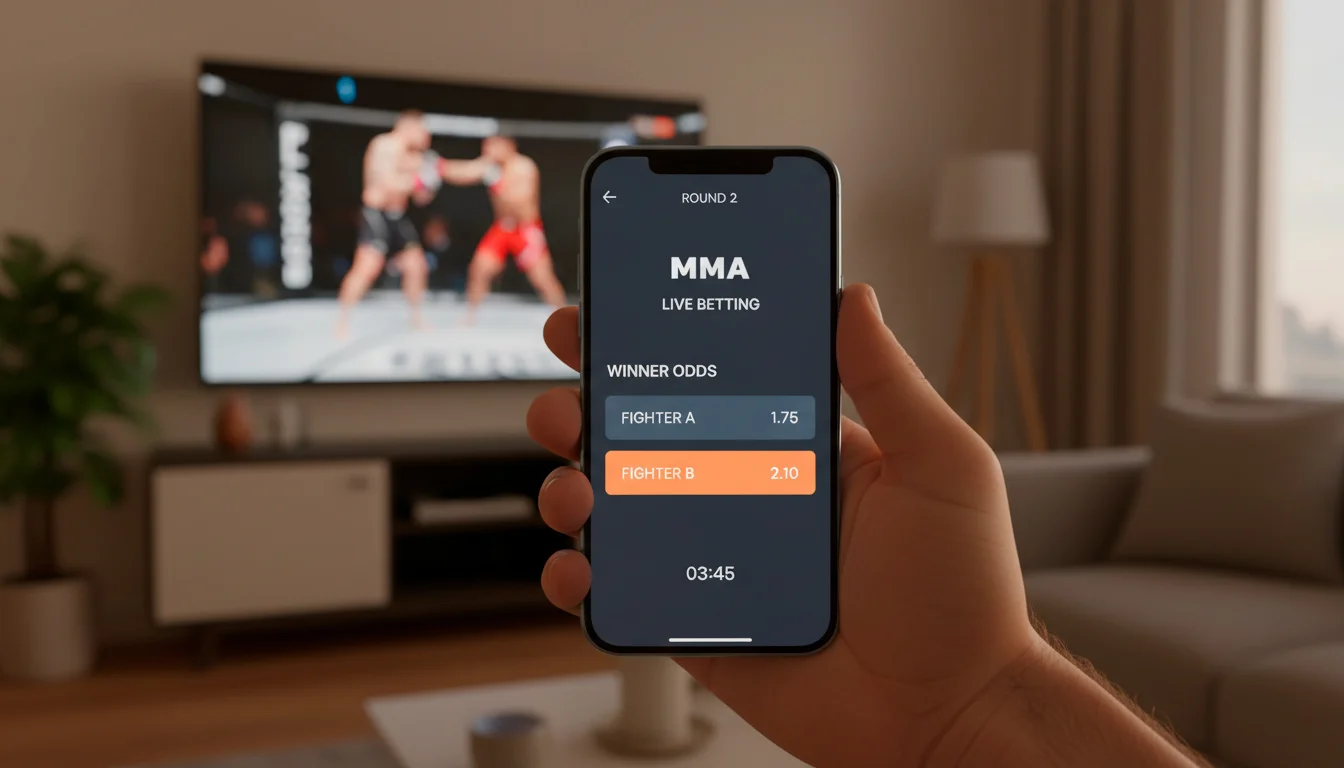
The screen that most UK round bets actually get placed on
Most UK UFC round betting now happens on a phone. Desktop accounts still exist, but the actual stakes during fight cards are increasingly placed on mobile apps — often by bettors watching the fight on the same device or a second screen. The mobile interface is not a neutral rendering of the desktop product. It is a fundamentally different user experience that changes what bets you can place, how quickly you can place them, and how often you misclick something expensive at the wrong moment.
I have done most of my live round betting on mobile for the past five years and I have made every mobile-specific mistake there is. Misreading an odds display because the font was too small. Tapping cash-out when I meant to place a new bet. Missing a between-round window because the app lagged for twelve seconds while reloading a price. The patterns are consistent and the fixes are simple once you know where to look.
This piece is the mobile-specific round-betting guide I wish existed when I started. Online gambling GGY in the UK grew by over £900 million to £7.8 billion in the most recent reporting year, and the vast majority of that growth came from mobile volume. Understanding what the mobile interface does differently is no longer optional.
Mobile latency is worse than desktop
The first thing to accept is that mobile apps genuinely lag desktop in price updates. The gap is not always huge — often just one to two seconds — but in a between-round window that lasts forty seconds effectively, a two-second lag is enough to miss the tightest opportunities.
The mechanism is a combination of network routing, app rendering pipelines, and battery-saving optimisations that ship with most mobile operating systems. Modern phones aggressively throttle background network activity and inactive apps, and betting apps get hit by this more than most because their price-update traffic is lightweight and not flagged as time-critical by the operating system. The result is that a price you see on your phone might be two seconds stale compared to the same price on a desktop browser.
Practically, this means the genuinely fastest live trades should happen on desktop if at all possible. Mobile is fine for standard live-betting decisions. Mobile is not fine for trying to beat an overreaction in the first three seconds of a between-round window. If that kind of trading is part of your workflow, tablet-on-couch or laptop-on-sofa is a better setup than phone-in-hand.
The app you use also matters. Some UK-licensed operators have mobile apps that update within milliseconds of the server pushing a new price. Others take noticeably longer, and the difference across operators can be two or three seconds even on the same network and same phone. If mobile speed matters to you, test your book’s app against a desktop session side by side for a full card and pick the operator whose mobile product is actually fast.
Notifications and the between-round window
Push notifications from betting apps are either the single most useful feature or the single most annoying depending on how you configure them. Most UK apps offer notifications for round ends, cash-out availability, and specific market reopenings. When configured intelligently, these turn the between-round window from “I need to be watching the screen constantly” into “the phone will tell me when to pay attention”.
The specific notifications I keep enabled are round-end alerts on any live bet I have in play and cash-out-available alerts above a specific threshold. The specific notifications I disable are promotional offers during fight cards, because those push notifications arrive at exactly the times I need to be reading live prices rather than enhanced odds marketing.
Notification delivery is not instant. Push notifications from betting apps typically arrive within two to five seconds of the triggering event, which is fast enough to catch most between-round windows but not fast enough for the first-second overreaction trading I mentioned earlier. If your mobile strategy depends on being the first to react to a knockdown, notifications are not a substitute for watching the stream and the price simultaneously.
Interface pitfalls worth calling out
Three specific mobile interface pitfalls have cost me money more than once each, and I mention them because they are almost universal across UK apps.
First is the auto-refresh of the bet slip when you switch between markets. On desktop the bet slip persists as you click around. On most mobile apps it does not — switching from moneyline to round-specific markets and back can clear your selections, which means decisions you made and stakes you planned out can vanish mid-navigation. The fix is to add selections to the bet slip and stake them before navigating to other markets.
Second is the odds display precision. Mobile screens show decimal odds with fewer visible decimal places than desktop in most apps, and a price that reads as 2.50 on mobile might be 2.47 in reality. This does not matter much on small bets but compounds meaningfully on larger stakes. Double-check the exact price in the bet slip before confirming.
Third is the confirmation flow. Some UK apps default to “one-tap bet placement”, which confirms a bet instantly the moment you stake. This saves time but removes the sanity check that prevents accidental bets on the wrong market. For any stake above a trivial amount, two-tap confirmation is the safer default, and changing the setting to require confirmation is a small discipline that has prevented plenty of misclick losses.
The 8% of UK adults who bet on sports online in a four-week period across 2025 are the public the mobile-app interfaces are designed for. The 10% who include all sports and racing online across four weeks represent the broader mobile betting population. For that broader group, the one-tap simplicity is a feature. For the serious round bettor placing meaningful stakes on round-specific markets, the same simplicity is a risk.
Battery and signal risk during a card
The unglamorous mobile-specific risk is simply running out of battery or signal during a live bet. I have had a live cash-out decision die because my phone dropped from 15% battery to power-save mode and the app refused to load prices quickly enough to execute. I have had a live between-round window close because I was watching the fight in a part of the house with weak signal and the app could not connect to submit the bet.
The specific preventions are mundane. Charge the phone before the card starts. Ensure wi-fi signal is strong in wherever you are watching. Disable battery-saver mode during the card even if the phone asks you to enable it. If your primary phone has ever dropped signal during an important round, have a second device available as backup — not a dramatic redundancy, just a tablet on the coffee table with the same app installed and logged in.
These sound obvious until they matter. The first time a battery dropout costs you a live cash-out decision, the preparation checklist stops feeling paranoid and starts feeling basic. I run through it before every card now and it takes thirty seconds, which is cheap insurance against a class of failure I have specifically experienced.
The question of whether mobile is the right primary venue
The honest answer is that mobile is fine for about 90% of what a round bettor does. Placing pre-fight bets on Thursday morning, checking prices in the afternoon, reviewing your own bet history — all of this works identically on mobile and is often faster because the phone is immediately to hand.
The 10% where mobile falls short is the intensive live trading window during fight cards, and the specific sub-strategies that depend on speed-of-execution (first-second overreaction trading, tight-window cash-outs on damaged favourites, rapid in-play laying on exchanges). For those use cases, desktop is meaningfully better. For everything else, mobile is the right tool.
My own setup is phone for everything except live trading during main cards, and desktop or laptop for the main cards themselves. The bet-slip continuity, the price-display precision, and the network reliability of a wired desktop connection are worth the small inconvenience of sitting at a desk for three or four hours on a Saturday night. For smaller undercard action I stay on mobile and accept the constraints.
Is app latency worse than desktop for live betting?
Consistently yes, though the gap varies by app. Modern betting apps lag desktop price updates by one to three seconds on average due to network routing, mobile operating system throttling, and app rendering pipelines. The gap is small for most decisions but meaningful for the tightest live trading windows where the first three seconds after a round ends contain the biggest pricing overreactions. For that specific use case, desktop is the better venue.
Do notifications help with the between-round window?
Yes, if configured selectively. Round-end notifications and cash-out-available alerts deliver within two to five seconds of the triggering event, which is fast enough to catch most between-round opportunities. Promotional notifications during fight cards are counterproductive — they arrive during the exact moments you need to be focused on live prices — so disabling marketing pushes while leaving betting-event pushes enabled is the right configuration.
Are bet slips auto-refreshed when navigating on mobile?
Some apps auto-refresh the bet slip when you navigate between markets, clearing selections that were pending. Other apps persist the slip across navigation. The behaviour is app-specific and worth testing before any significant live session. The safe habit is to add selections to the bet slip and stake them before navigating to other markets, which prevents losing pending selections to an unexpected slip refresh.
Prepared by the Round Betting ufc editorial staff.