UFC Fight-Week News: Which Headlines Actually Move Round Lines
 Available in US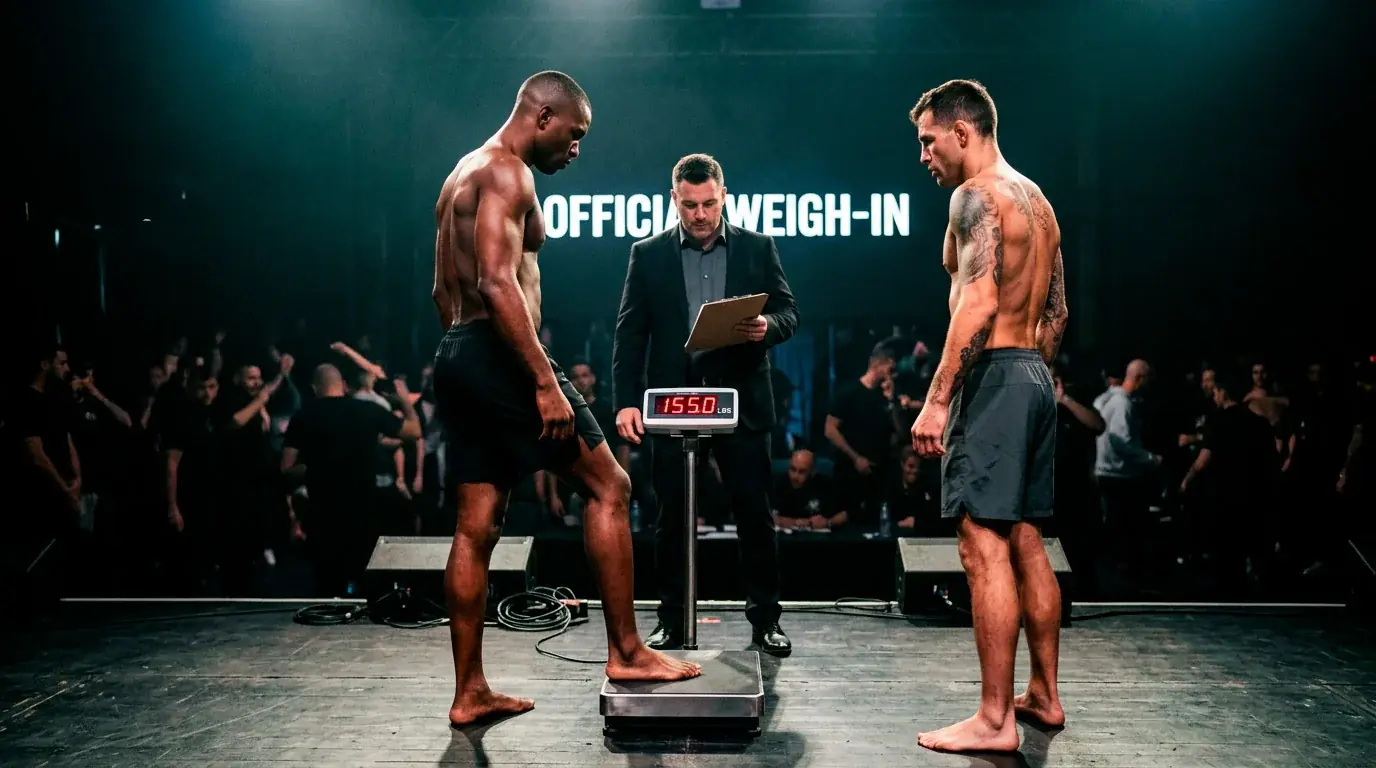
The news cycle that pretends to matter and the news that actually does
Fight week coverage of any UFC card produces dozens of headlines that look like they should move the round markets. Weigh-in drama. Staredown intensity. Corner switches. Nutrition rumours. Open workout footage. The vast majority of these headlines have no measurable impact on round-market prices, and the bettor who reacts to every piece of fight-week content ends up chasing noise for most of the week.
A small number of fight-week news items do genuinely matter, and they matter in specific and predictable ways. Distinguishing the signal from the noise is part of the week’s work, and once you know what to look for the job becomes faster and cleaner. “My approach to being a betting analyst is to educate and entertain fans”, as Ian Parker of ESPN put it, and the education about which fight-week news matters is one of the more practical pieces of knowledge a UK round bettor can carry.
This piece walks through the three categories of fight-week news that genuinely move round lines — weight cuts, injury reports, and camp changes — plus the broader category of “noise that only looks like news” that should be filtered out. The goal is fewer reactive stakes and more disciplined weekly routines.
The weigh-in and what it actually tells you
Weigh-in results matter for round betting in two specific cases. The first is when a fighter misses weight. A fighter who shows up overweight has either handled their cut badly or has been walking around significantly heavier than their contracted weight class. Both scenarios have implications for round-market pricing. A botched cut often leaves the fighter cardio-compromised for fight night, particularly in rounds two and three. A fighter walking around heavier brings a physical advantage that can compress finish windows, especially early in the fight.
The second case that matters is when a fighter looks visibly drained on the scale. This is a softer signal than a missed weight but still informative — a fighter whose weight cut was extreme to the point of visible compromise often performs below their baseline in the early rounds and, occasionally, across the full fight. The shift is usually towards shorter expected fight length with the drained fighter being finished rather than finishing, which moves under-rounds prices and method-of-victory lines.
What weigh-ins do not reliably tell you is anything about intensity, confidence, or mental state. Staredowns that look dramatic are almost always marketing theatre rather than predictive signal. Fighters smiling during face-offs and fighters visibly angry during face-offs produce broadly similar outcome distributions. The performative elements of fight week are genuinely performative, and bettors who stake off staredown energy rather than measurable signal tend to lose money on that specific decision type.
Injury leaks and how to read them
Late-breaking injury news during fight week is the category most likely to produce genuine market movement, but most injury news that reaches public attention is either minor or already priced in. The injuries that actually matter tend to be the ones that do not surface in formal press releases but appear in training-partner reports, gym chatter, or specific injury-specialist coverage.
The specific kinds of injuries that move round markets materially are cardio-affecting issues (recent illness, serious weight-cut complications, travel fatigue), contact-affecting issues (hand injuries that compromise finishing ability, recent concussions that affect chin durability), and range-affecting issues (hip or knee problems that limit kicking or takedown entries). Each of these has a specific signature on the kinds of round bets that should shift in response.
Minor injury news — a fighter dealing with a lingering ankle issue, a minor cut during sparring weeks earlier, a general “training camp was tough” story — rarely produces pricing movement worth acting on. The professional fighters on UFC cards train through minor issues constantly, and most public disclosures of minor injuries are part of the standard rhetorical toolkit for discussing camp rather than genuine red flags.
The test I apply is whether the injury news describes a specific functional limitation that would plausibly affect the fight. “Fighter has been dealing with a knee issue” is not actionable. “Fighter has been unable to complete full cardio sessions for two weeks” is actionable and suggests meaningful under-rounds value on their fight. The distinction is about specificity and about whether the described limitation maps to a specific element of fight-night performance.
Camp changes and what they signal
A fighter changing camps shortly before a fight is a less common but meaningful signal. Camp changes typically happen in one of two scenarios — either the fighter had a disagreement with their previous gym and has left on poor terms, or the fighter has strategically relocated to prepare for a specific opponent. The two scenarios have opposite implications for round pricing.
Acrimonious camp changes tend to produce underperformance. The fighter is working with new coaches who do not know their habits, new training partners who do not match their sparring needs, and often a shortened effective camp as administrative issues consume time that should have been spent preparing. The pricing implication is usually shorter expected fight length with the fighter being finished, particularly if the camp change happened in the final four weeks before the fight.
Strategic camp changes, by contrast, can be positive signals. A fighter who relocates to a specific gym known for producing counter-wrestlers ahead of a fight against a dominant wrestler has made an intentional preparation choice. Those shifts often do produce fight-night improvements, though the effect is usually smaller than the fighter’s camp would have you believe.
Distinguishing acrimonious from strategic is not always easy from public reporting. The signals I watch for are the timing of the announcement (close to the fight suggests acrimony, further out suggests strategy), the specific language used in interviews, and whether the fighter has retained or replaced their head coach relative to their assistant coaches. A full coaching reset shortly before a fight is almost always a bad signal. A partial adjustment is usually neutral or slightly positive.
Signal versus noise: the week’s filter
Most fight-week coverage is entertainment, designed to build fan engagement rather than provide actionable information. Press conferences with choreographed trash talk. Promotional features. Behind-the-scenes footage. These are legitimate parts of the product and I enjoy them, but they do not carry pricing-relevant information for the round bettor.
My filter for the week is to ask whether a piece of news describes a specific fact about one of the fighters that changes my baseline assessment of their likely performance. Weight status on the scale is a fact. Documented specific injury is a fact. Camp composition is a fact. Emotional state during a staredown is not a fact in the pricing-relevant sense — it is a performance.
The 8% of UK adults who bet on sports online in a four-week period across 2025 constitute the audience most fight-week coverage is designed to reach, and the coverage’s job is to generate engagement with the card rather than to provide pricing analysis. The specific bettors who need pricing analysis are a smaller subset, and the coverage written for them — detailed style breakdowns, fighter history reviews, match-up-specific analysis — tends to live on specialist sites rather than in the mainstream fight-week news cycle.
A week-long filter of “what specific fact did I learn that changes a specific baseline” eliminates 80% to 90% of the week’s headlines as non-actionable. The remaining 10% to 20% deserves attention and occasionally produces round-market staking opportunities. Running that filter consistently is faster than absorbing every piece of content and then filtering reactively, and it produces better decisions with less effort.
The fight-week habit that makes this pay
My own fight-week routine is built around two or three specific check-in points rather than continuous monitoring. Wednesday evening I check whether any injury news has surfaced. Friday afternoon after the weigh-ins I check weight status and note any fighters who looked visibly drained. Saturday morning I check for any late-breaking news items that would genuinely affect my pre-fight reads.
Between those check-ins I do not engage with fight-week content aimed at the general audience. Press conferences, staredowns, open workouts, promotional features — I ignore them unless a specific item gets flagged as containing actionable information. The ignored content would not have changed my bets if I had consumed it, and the time saved goes into actual fight analysis that produces better decisions than reactive content consumption would.
Over a calendar year of UFC cards, the disciplined-filter approach produces fewer total bets than a reactive approach would, but the bets that do get placed tend to be better-supported and more profitable. The trade-off is volume for quality, and for round betting specifically the quality side of that trade tends to win meaningfully.
Does a missed weight genuinely shorten the fight?
Usually yes, in the sense that the expected fight length measurably compresses. A fighter who missed weight typically has either handled their cut badly (leaving them cardio-compromised) or has been walking around heavier than their class (giving them a temporary physical advantage that often produces earlier finishes either way). Both scenarios skew the expected fight length shorter, and under-rounds markets on those fights often offer genuine value that the market has priced less fully than a serious post-weigh-in adjustment would justify.
Are open workouts predictive of fight-night performance?
Generally no. Open workouts are promotional events designed for fan engagement rather than genuine technical showcases, and the performances there do not reliably predict fight-night behaviour. Fighters sandbag their open workouts deliberately, train around injuries, or put on shows that look unlike their actual fight style. Reading fighter form from open workout footage is one of the more common unproductive habits in fight-week analysis.
How fast do books react to fight-week injury news?
Major injury news that reaches public reporting typically moves the relevant markets within an hour at the sharper UK-licensed books and within several hours at slower operators. The specific markets that shift — usually round totals and method-of-victory lines rather than moneyline — depend on the nature of the injury. Injury news leaked through private channels or gym reports, which is where the more actionable information often sits, can take a day or more to propagate into market pricing.
Published by the Round Betting ufc team.